
Unlock Better Pleasure: Vaginal Tenting Explained (+ 3 Easy Exercises)
Sep 17, 2026If you’ve ever dived deep into female anatomy or tried troubleshooting why certain intimate moments feel more like a friction-filled chore than an effortless slide into pleasure, you might have stumbled across a peculiar medical term: vaginal tenting.
Sounds a bit like a weekend camping trip, right?
Except, instead of pitching a nylon dome under the stars, your body is doing some heavy-duty architectural remodeling beneath the surface.
(And yes, we know that tenting is also the term used when guys get too excited and their pants make a nice tent cover in broad daylight)
Here’s the kicker though: just like podcast bros talking about tracking their VO2 max, knowing what a physiological term means is only half the battle.
The real magic happens when you figure out how to optimize it and use it to your advantage.
At Gohddess, we’re obsessed with turning passive physiological facts into active, pleasure-boosting skills.
If your intimate life has ever felt dry, rigid, or cramped, like you’re constantly bumping into a wall, then understanding and training for vaginal tenting is about to change everything.
Let’s clear this up properly.
In this post, we’ll answer:
- What vaginal tenting actually is
- Why it matters for your orgasms
- How targeted vaginal gymnastics (pompoir) can help you master your body’s internal architecture.
So here’s the pitch (pun intended)...
What Is Vaginal Tenting, Anyway?
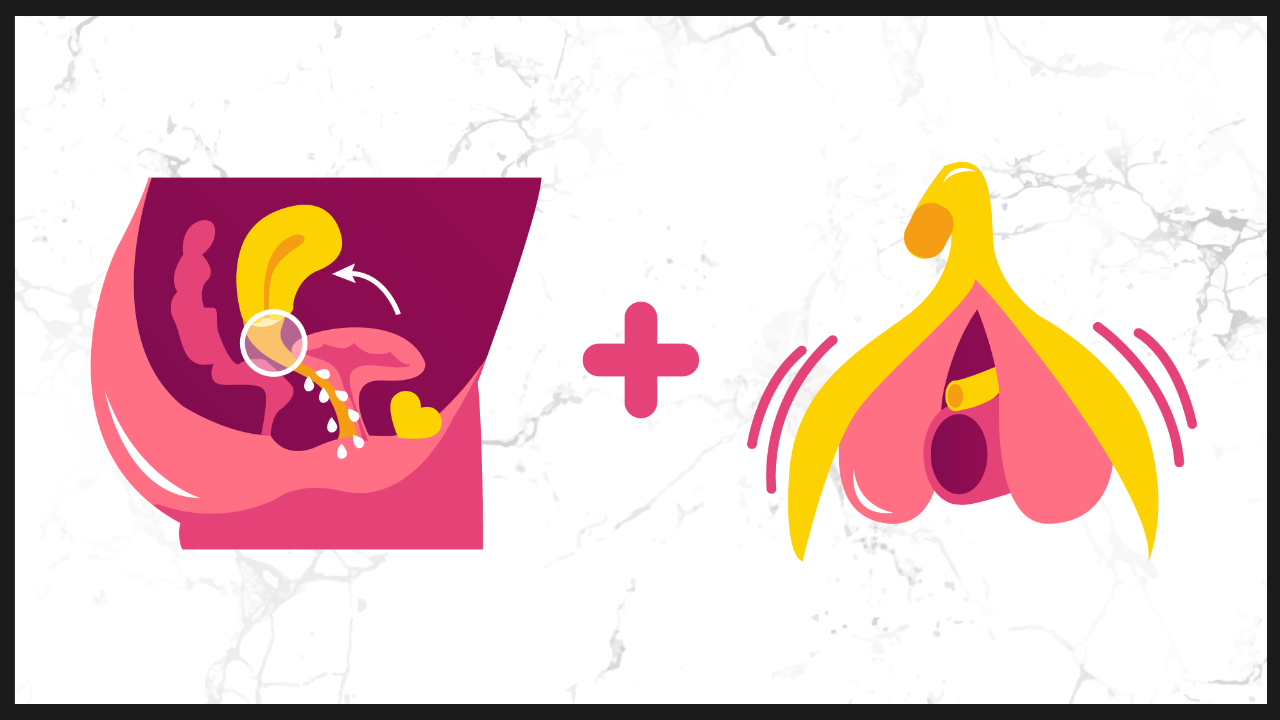
To put it simply, vaginal tenting is a natural physiological arousal response where your uterus and cervix lift upward, and the upper portion of your vaginal canal expands to create extra internal space.
Think of it as your body rolling out the red carpet.
When you experience sexual arousal, your nervous system triggers a cascade of events. Blood flow increases, lubrication kicks in, and your internal anatomy shifts to accommodate penetration.
More specifically, the uterus lifts up (like the center pole of a tent lifting the canvas), which lengthens and widens the vaginal barrel.
Why does this matter?
- It prevents discomfort: Without proper tenting, the vaginal canal remains relatively short and rigid. That means deep pressure can force a partner, toy, or finger directly against your cervix, which is packed with sensitive nerve endings and, quite frankly, can hurt.
- It creates space: Vaginal tenting ensures there is enough room for deep insertion, transforming what could feel like a cramped, sharp experience into a smooth, seamless fit.
- It sets the stage for deeper orgasms: By elongating the canal and shifting the internal geography, your body opens up access pathways to the most sensitive regions of the vagina, including the areas responsible for A-spot and cervical orgasms.
If your vagina hasn't tented properly, every thrust can feel like hitting a literal wall. But when tenting happens efficiently, your internal system is primed, relaxed, and ready for maximum pleasure.
The Trap of Hypertonicity: Why Squeezing Blindly Backfires
Now, if you’ve spent any time looking into pelvic floor health, you’ve probably been handed the same old prescription: Do your kegels.
And look, kegels have their place.
They build baseline strength and help manage incontinence. But here is where standard advice falls apart when it comes to sexual mechanics:
Many traditional pelvic floor programs focus exclusively on making your vaginal muscles as strong and by extension, as tight as possible. But here is the architectural truth about your pelvic floor: a healthy pelvic floor is not just strong; it is flexible.
When muscles are overly trained to clench or are chronically stressed, they can become hypertonic. This means they are stuck in a constant state of high contraction, unable to fully relax or release.
If your pelvic floor is trapped in hypertonicity:
- Tenting is inhibited: Vaginal tenting requires your uterus to lift and your deep pelvic floor muscles to let go, not clamp down.
- Penetration becomes painful: A tightly clenched muscle acts like a restrictive band, making insertion feel dry, rigid, and sharp.
- Sensation drops: Nerves get compressed in a chronically tight pelvis, dulling your internal awareness.
This is why at Gohddess, we don’t just teach you how to squeeze (we’re not in a fresh orange juice shop in any way).
We teach you how to master the full range of motion which means balancing strength with deep, intentional release.
Enter Vaginal Gymnastics (Pompoir): Beyond Basic Kegels
If kegels are like learning how to walk in a straight line, vaginal gymnastics (pompoir) is learning how to run, dance, and leap across a stage.
Pompoir is an ancient practice rooted in developing exquisite, conscious control over the muscles of the vaginal canal. Rather than just doing repetitive, global clenches, pompoir trains your neuromuscular system to coordinate regional isolations, depth control, timing, and most importantly eccentric release.
Eccentric contractions involve lengthening a muscle while under tension.
In the context of your pelvic floor, this means learning how to consciously open, elongate, and relax your internal canal on command.
This precise control over relaxation is the secret to enhancing natural vaginal tenting. When you can command your pelvic floor to let go as intelligently as you can command it to grip, you optimize your body’s arousal response.
What this basically means is that you stop fighting your own anatomy and start working in harmony with it.
While the pelvic floor muscles themselves don’t physically pull the vagina into a "tent" shape, improving your pelvic floor health, blood flow, and muscle tone (through a practice like Pompoir) directly optimizes the neurological and vascular pathways required for the tenting response to happen.
Exercises and Practices to Improve Vaginal Tenting and Tone
If you want to enhance your body’s natural tenting response, boost internal sensitivity, and make penetration feel like an absolute dream, you need a balanced training routine.
Here are the core exercises from the Gohddess methodology that focus on building both strength and the deep release required for true vaginal elasticity.
1. The Reverse Kegel (The Art of the Deep Release)
Since vaginal tenting requires your internal muscles to lift, shift, and open, the reverse kegel is your best friend.
- How to do it: Sit or lie down comfortably and bring your awareness to your pelvic floor. Instead of pulling upward as you would with a traditional kegel, gently inhale and imagine your pelvic floor gently softening, dropping, and widening. Almost like the sensation of releasing urine or relaxing your body right before passing gas.
- Why it helps: It trains your nervous system out of chronic clenching. By practicing the reverse kegel, you teach your deep pelvic floor muscles how to let go on command, clearing the path for your uterus to lift and your vaginal canal to fully tent during arousal.
2. Full Range-of-Motion Contractions (Milking)

Once you master the release, you need to train the transition between opening and closing. This is where milking techniques come into play.
- How to do it: Begin with a full reverse kegel (letting everything open and expand). Then, sequentially engage your vaginal muscles from the deepest portion near the cervix all the way down to the vaginal entrance. Hold briefly at the top, and then consciously reverse the wave, releasing each level sequentially back down.
- Why it helps: This exercise builds neuromuscular coordination. It maps out the entire vaginal canal in your brain (a process known as cortical remapping), ensuring that your body knows how to transition smoothly from an open, tented state to an active, responsive grip.
3. Isometric Endurance Holds
Strength matters, but endurance keeps your pelvic floor stable and responsive under sustained pressure.
These are also known as the kegel holds.
- How to do it: Perform a moderate, controlled contraction of your vaginal canal (about 50% to 70% of your maximum effort). Hold that squeeze steady and stable for 5 to 10 seconds while maintaining normal, steady breathing (no holding your breath!). Follow the hold with an intentional, relaxed release that lasts twice as long.
- Why it helps: It builds muscular stamina and improves blood flow to the entire region, heightening baseline sensitivity and tissue health.
How to Get Started with Vaginal Gymnastics
If you’re tired of guessing whether your pelvic floor is doing what it’s supposed to do, it’s time to stop squeezing blindly and start training intentionally (as weird as this sounds, it’s the truth!)
The Ohlympus Program was designed specifically for women who want to move past basic medical kegels and truly master the art of vaginal gymnastics.
Inside our structured system, you’ll discover step-by-step guidance to help you unlock your body's full potential:
- Pompoir Foundations: Animated tutorials that guide you through every core exercise, ensuring you get the form right from day one.
- Advanced Depth Control: Learn how to isolate specific regions, control your internal pacing, and master the eccentric releases that trigger better tenting and deeper orgasms.
- The Science of Pleasure: Access deep dives into the biomechanics of female arousal, cortical remapping, and sensation enhancement.
- A Supportive Community: Connect with a private community of women who are actively leveling up their pelvic control, intimacy, and sexual confidence together.
Your body already possesses an incredible, complex architecture designed for immense pleasure.
With the right tools, you can turn on the lights, map out your internal landscape, and experience intimacy the way it was always meant to feel.
See you soon, goddess.
Ready to become the ultimate sex goddess?
Get our step-by-step, fully animated Pompoir course.
Stay connected with news and updates!
We hate SPAM. We will never sell your information, for any reason.
