

Sex After Birth: How Long to Wait (and How to Make It Feel Amazing Again)
Oct 29, 2026First of all, congratulations! You’ve brought a whole new human into the world.
Whether your baby arrived with a heroic push or through major surgery (equally heroic, by the way), your body just performed an absolute miracle.
Now that the newborn haze is starting to settle, a very real, very normal question starts creeping into your mind (or your partner’s eye contact): When can we actually have sex again? And… will it ever feel good again?
Before anything else: you should NEVER feel pressured into this.
The first and most important rule of sex after birth is always: GO AT YOUR OWN PACE.
So let’s say you are starting to feel ready, but there’s a little seed of doubt in your mind.
Maybe you’re scrolling through forums at 3:00 AM while feeding the baby, looking for answers.
Well, you’ve come to the right place.
We’re gonna give you the real deal on sex after giving birth. No clinical mumbo-jumbo, no shame, just honest, medically backed facts and a big dose of self-love.
|
Quick answer: Most doctors and midwives suggest waiting around 4 to 6 weeks after giving birth (vaginally or by C-section) before having penetrative sex, ideally until your bleeding has stopped and you’ve had your postnatal check-up. There’s no fixed rule, though: the right time is when your body has healed and you feel ready. And since you can get pregnant as early as 3 weeks after birth, sort out contraception first. |
How Long After Giving Birth Can You Have Sex?
Most doctors and midwives recommend waiting around 4 to 6 weeks after giving birth before having penetrative vaginal sex, usually until after your postnatal check-up.
Interestingly, there’s no strict official rule. Mayo Clinic says there’s no required waiting period, and the NHS says there are no rules about timing. But waiting until your check-up gives your body time to heal, and gives your doctor a chance to make sure everything has healed well.
You might be asking, why wait at all?
It isn’t a rule doctors made up to keep you bored. It’s all about healing:
- The placental wound: However you gave birth, the spot where your placenta detached from your uterus leaves a wound inside your uterus (about the size of your palm at first) that takes around 6 weeks to fully heal. Until it has healed and the bleeding (lochia) has stopped, putting anything into your vagina raises the risk of infection.
- Perineal healing: If you had a tear or an episiotomy, those delicate tissues and stitches need time to knit back together without friction pulling them apart.
- C-section recovery: A C-section is major abdominal surgery. And here’s something many people don’t realize: having a C-section doesn’t mean you can have sex sooner. The placental wound inside your uterus is exactly the same, and your abdominal wall needs serious downtime too.
The 6-Week Check: Clearance vs. Readiness
Here’s the biggest secret nobody tells you about the famous 6-week check-up: medical clearance is a green light for safety, not a command performance.
Just because your doctor looks at your stitches or C-section scar and says “You’re good to go!” doesn’t mean your body, or your brain, is instantly ready to jump back into bed.
Research shows that it’s very common for sex to feel uncomfortable or even painful the first few times after birth, and for desire to take a while to come back (Leeman & Rogers, 2012).
That said, it isn’t like that for everyone. You might have sex again and feel no pain at all.
And if you feel completely unaroused, or even terrified, at week six? That’s completely normal too.
If the fear feels intense, or comes with flashbacks or panic linked to a difficult birth, please mention it to your doctor or midwife. Birth trauma is real, common and very treatable, and you don’t have to just grit your teeth through it.
Remember: your timeline is yours alone.
Yes, You Can Get Pregnant Again Right Away
This one surprises a LOT of new moms, so we want to say it loud and clear.
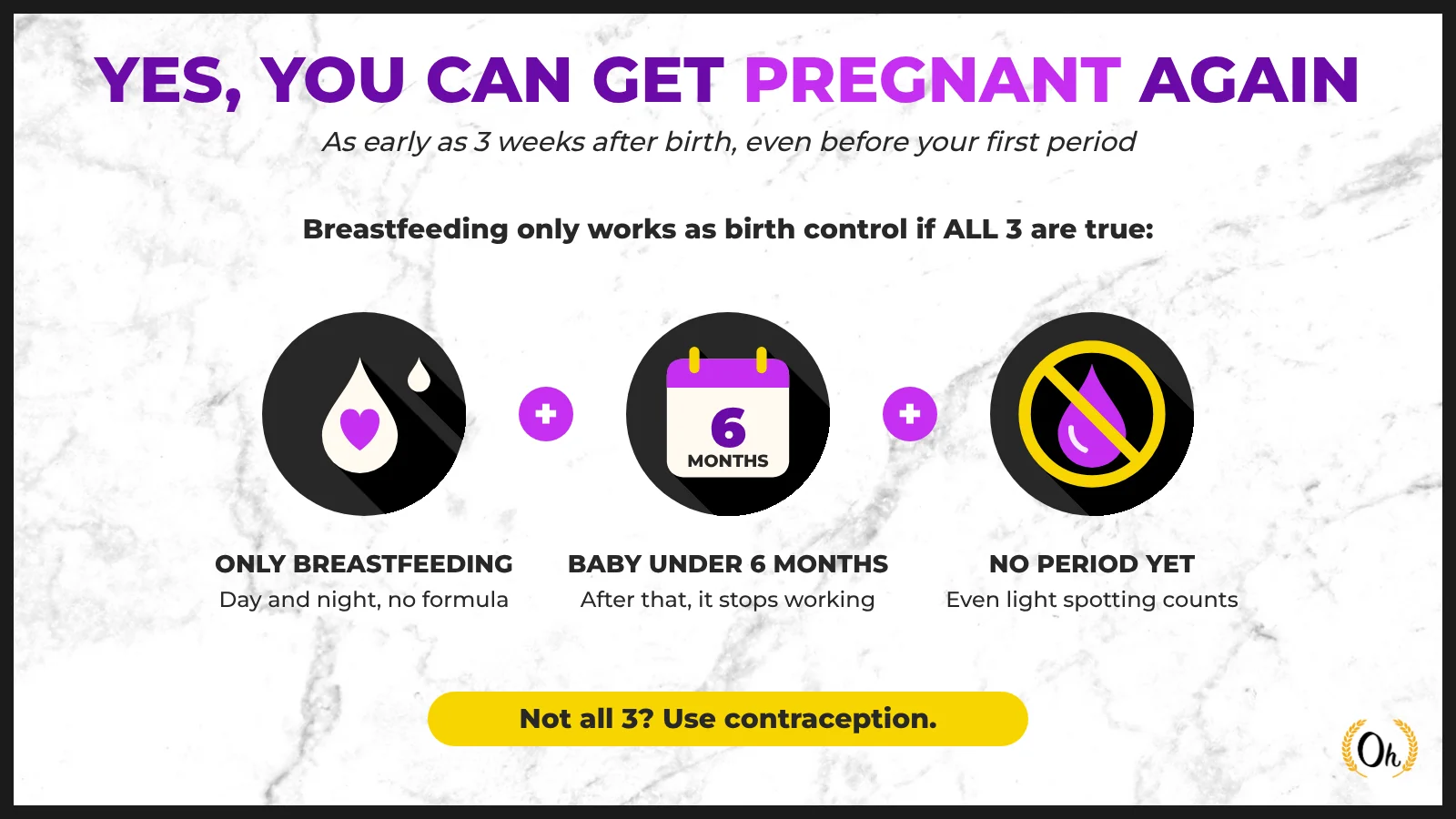
According to the NHS, you can get pregnant as early as 3 weeks after giving birth, even if you’re breastfeeding and even if your period hasn’t come back yet. That’s because you ovulate before your first period.
What about breastfeeding as birth control? It can work, but only if all three of these are true:
- You’re breastfeeding exclusively: only breast milk (no formula, solids or pacifier), feeding often day and night, with no long gaps between feeds. (Pumping instead of feeding at the breast may make it less reliable.)
- Your baby is under 6 months old.
- Your period hasn’t come back (even light spotting counts).
If any of those change, it’s no longer reliable. And because health experts recommend waiting at least 12 to 18 months between pregnancies, it’s a good idea to talk to your doctor or midwife about contraception before you start having sex again. Ideally do it before you leave the hospital or in the first couple of weeks, because your 6-week check may come after your fertility does! Condoms are a great stopgap in the meantime.
What’s Happening Down There? The Postpartum Body Realities
To navigate post-baby intimacy without panic, it helps to understand the huge changes happening behind the scenes:
1. The Hormonal Sahara (Vaginal Dryness)
If you feel like a desert down there, blame your hormones, specifically estrogen.
After delivery, estrogen plummets. And if you’re breastfeeding, your body produces high levels of prolactin to make milk, which keeps estrogen low.
Low estrogen makes the vaginal walls thinner, less stretchy and much less lubricated. (The good news? There’s plenty you can do about it. Our guide to natural remedies for vaginal dryness covers it all.)
2. “Touched Out” Brain, Fatigue and Low Mood
When you spend 23 hours a day holding, feeding, rocking and soothing a tiny baby, your nervous system goes into sensory overload.
By nighttime, your brain craves physical space (and probably some quiet), not more touch. Add sleep deprivation, which can raise stress hormones like cortisol and drag your libido down, and sex can feel like just another chore on a very long list.
One more thing worth knowing: if your low desire comes with feeling persistently sad, numb, anxious or hopeless for more than a couple of weeks, it could be a sign of postnatal depression. It’s very common and very treatable, so please talk to your doctor or midwife. You deserve support too. And if you ever have thoughts of harming yourself or your baby, contact your doctor, midwife or emergency services right away.
3. Pelvic Floor Strain
Your pelvic floor muscles spent nine months holding up extra weight, followed by the intense stress of childbirth.
The result?
Your muscles can end up either overstretched and weak, or tense and extremely tight (hypertonic) as a protective response. Tight muscles act like a defensive shield, which can make penetration burn or feel like hitting a brick wall.
4. Leaky Breasts (Yes, Really)
If you’re breastfeeding, don’t be surprised if your breasts leak milk during sex, especially at orgasm. The same hormone that makes you feel close and connected (oxytocin) also triggers your milk let-down.
It’s completely normal! Feeding or pumping beforehand, or keeping a bra on, can help if it bothers you. (Or just laugh about it together. Honestly, it’s a rite of passage.)
How to Make Sex After Birth Feel Good Again
Getting your groove back isn’t about “grinning and bearing it.”
Some tenderness the first few times is common. But sex shouldn’t hurt, and pain is never something to push through. If it hurts, stop, slow down, or try something else.
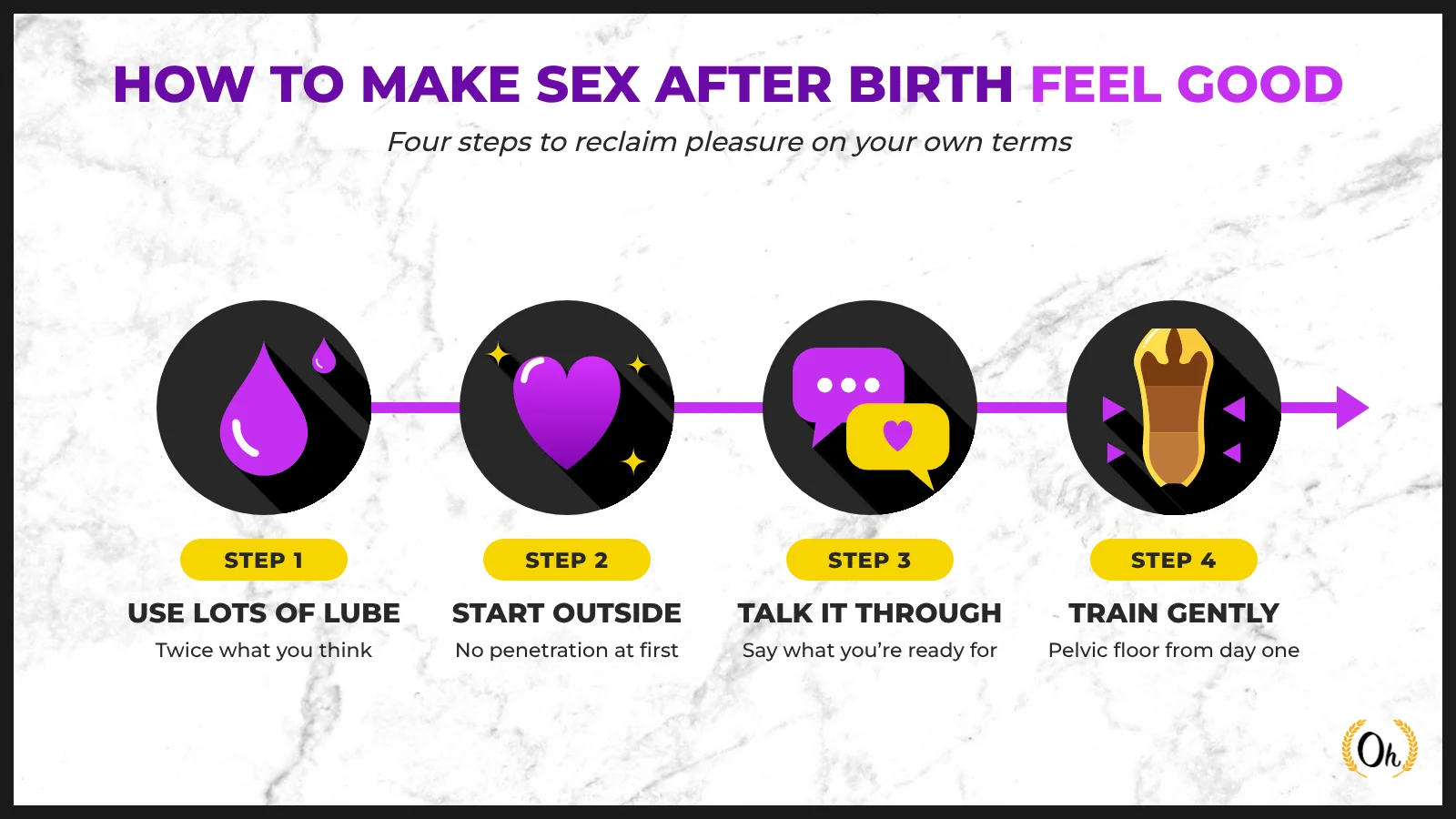
Here’s your game plan for reclaiming pleasure on your own terms:
Lube Is Your Best Friend
Ditch the idea that needing lube means you aren’t turned on enough. Postpartum dryness is a hormonal state, not a reflection of your desire.
Stock up on a high-quality, pH-balanced, water-based lubricant free from glycerin and parabens, and use twice as much as you think you need. You’re easing back into it after bringing a whole human into the world! (Bonus: water-based lube is safe with condoms, which you might well be using right now.)
Start Without Penetration
Who said sex has to mean intercourse right away?
Ease back in with outercourse, sensual massage, clitoral stimulation or mutual touch. (Our guide to using a vibrator has plenty of ideas.)
A little heads-up: in the early weeks, orgasm can bring on some period-like cramping. The same hormone that powers orgasm (oxytocin) also makes your uterus contract as it shrinks back down. It’s normal, and it eases off with time.
Taking penetration completely off the table for a night takes the pressure off and lets your nervous system relax. And being relaxed means you’ll be more open to pleasure.
This is a journey, not a race.
Choose Positions That Put You in Control
When you do try penetration again, pick positions where you control the depth and speed:
- You on top: You decide exactly how deep and how fast.
- Spooning (side by side): Gentle, shallow, and no pressure on your belly or C-section scar.
Talk to Your Partner
Your partner can’t read your mind, and they might be just as nervous as you are. Tell them what you’re ready for, what you’re not ready for yet, and what feels good. Something as simple as “I want to be close to you, but I’m not ready for sex yet. Can we cuddle tonight?” keeps you connected without any pressure.
Master the Art of Pompoir (Vaginal Gymnastics)
Here’s some good news: you don’t have to wait six weeks to start caring for your pelvic floor. NHS physiotherapists recommend starting gentle pelvic floor exercises as early as the day after giving birth, even if you have stitches, as long as it feels comfortable. Stop if you feel pain, bulging or heaviness. Had a C-section? Wait until your catheter is out. Had a severe (third- or fourth-degree) tear? Check with your midwife or a pelvic floor physical therapist first.
And simple Kegels aren’t your only option. Enter Pompoir, the ancient practice of intentional pelvic floor movement and control.
Unlike basic squeezing, Pompoir teaches you to consciously contract, relax, isolate and control different areas of your pelvic floor. After childbirth, that brings some lovely benefits:
- Better blood flow: Moving your pelvic floor gets blood flowing to the area, and many women find it helps them feel more “awake” down there. Exercises like the Milking Technique are perfect for this.
- Reconnecting with sensation: Pregnancy and birth can leave things feeling a bit “numb” or disconnected down there. Focused practice helps you reconnect with your body and feel sensation more clearly again.
- Releasing tension: Learning to relax your pelvic floor is just as important as squeezing it. Pompoir trains you to let go of involuntary tension, which can make penetration much more comfortable. If sex already hurts, start here (with release, not squeezing) and get checked by a pelvic floor physical therapist.
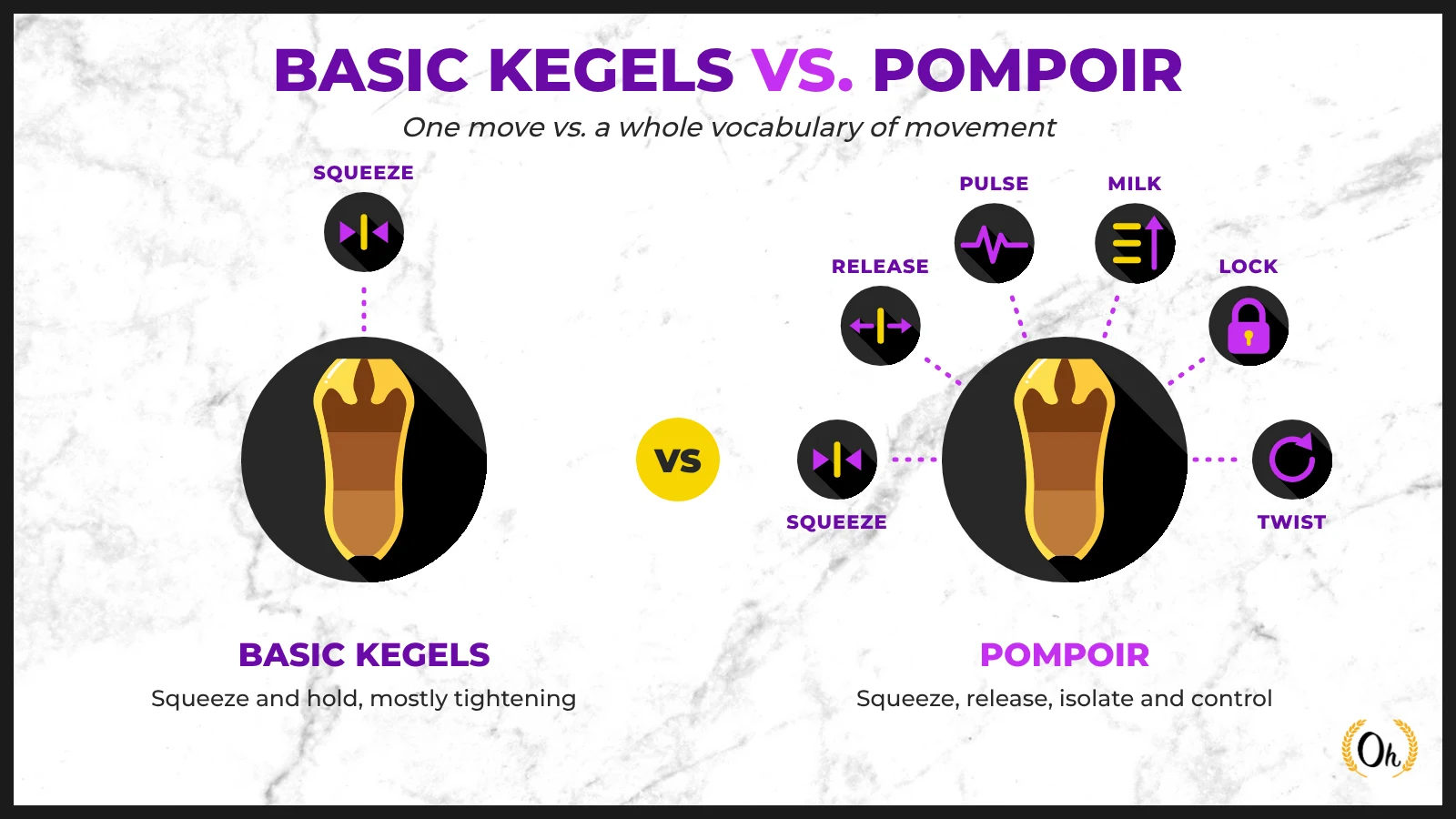
Start with gentle squeezes and releases in the early weeks, then build up to more advanced work once your doctor has cleared you for exercise. If you can, book a check-up with a pelvic floor physical therapist around the 6-week mark. They can tell you whether your muscles need strengthening, relaxing, or a bit of both before you level up. When you’re ready, specialized training like the step-by-step movements in The Oh!lympus Program helps you rebuild strength and control, and many women find it helps them feel more sensation and stronger orgasms again.
Your Postpartum Sex Recovery Roadmap
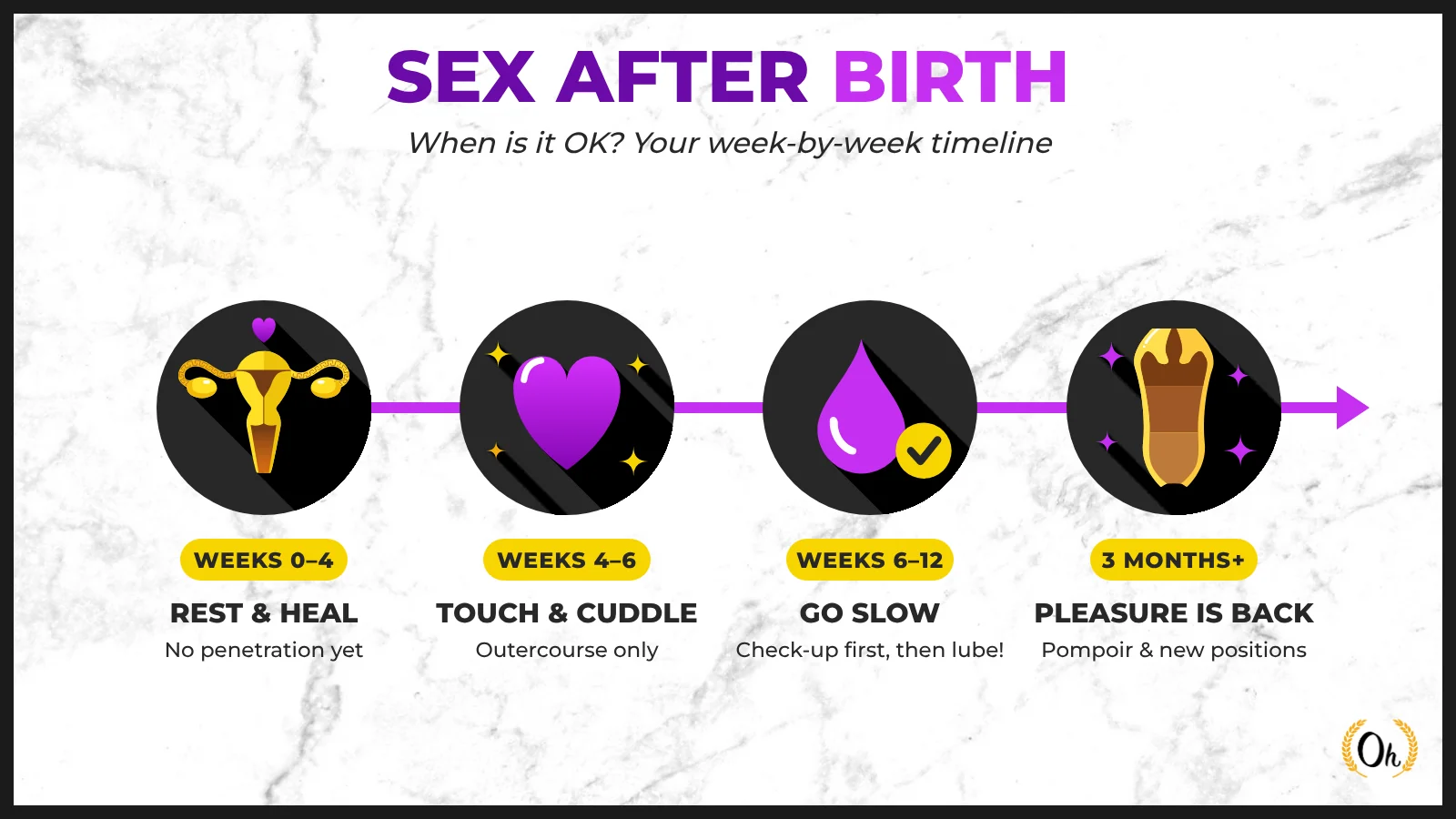
Here’s a quick guide to help you navigate your journey week by week. (Remember, everyone heals differently, so follow your body and your doctor’s advice.)
|
Recovery phase |
Physical focus |
Intimacy & movement |
|---|---|---|
|
Weeks 0–4 |
Rest, healing, bleeding (lochia) settling down. |
Cuddling, skin-to-skin, emotional connection, rest. Gentle pelvic floor squeezes and breathing if comfortable. Hold off on penetration while you’re bleeding and healing. Sort out contraception (you can be fertile from week 3!). |
|
Weeks 4–6 |
Continued healing. |
Non-penetrative touch, light walks, gentle pelvic floor exercises. |
|
Weeks 6–12 |
Postnatal check-up, addressing dryness or scar tissue. |
Gentle penetration if you feel ready (lots of lube!), external stimulation, building up your Pompoir practice. |
|
3 months+ |
Rebuilding strength, sensation and flexibility. |
Advanced vaginal gymnastics, exploring new positions, restoring deep sexual confidence. |
When to Seek Extra Help
Some discomfort the first few times can happen, but severe or ongoing pain is not something you just have to live with.
Reach out to your doctor, midwife or a pelvic floor physical therapist if you experience:
- Sharp, stabbing pain on entry that doesn’t ease up.
- Heavy bleeding after sex.
- Fever, foul-smelling discharge, or pain that gets worse instead of better (possible signs of infection).
- Burning or ongoing pelvic aching in the hours after sex.
- A feeling of pressure, bulging or heaviness in the vagina (which could be a sign of pelvic organ prolapse).
- Leaking pee, gas or poop that hasn’t improved after the first few weeks (very common, and very treatable).
- Fear, flashbacks or panic about sex that feel connected to your birth experience.
- Low mood, anxiety or a complete loss of interest in things you used to enjoy that lasts more than two weeks.
Very heavy bleeding (soaking a pad in an hour or less) needs urgent care, so don’t wait for an appointment.
Frequently Asked Questions About Sex After Birth
How long after birth can you have sex?
Most doctors recommend waiting around 4–6 weeks, usually until your postnatal check, so your body can heal. But there’s no rush. Wait until you feel ready.
Can you get pregnant right after giving birth?
Yes. You can get pregnant as early as 3 weeks after birth, even before your first period and even while breastfeeding. Sort out contraception before you start having sex again.
Is it safe to have sex before 6 weeks?
There’s no official rule, and some women feel ready sooner. The main thing is to wait until your bleeding (lochia) has stopped and any stitches or wounds have healed, because before then the risk of infection is higher. If you’re unsure, ask your midwife or doctor to check you first.
Does sex feel different after giving birth?
It can, at first. Dryness, healing tissue, a pelvic floor that’s stretched or tense, and plain old nerves can all change how sex feels. For most women it gets better with time, plenty of lube and gentle pelvic floor training (both strengthening and relaxing). If something still feels wrong after a few months, see a pelvic floor physical therapist.
Is it normal for sex to hurt after giving birth?
Some tenderness the first few times is common, especially with dryness or healing stitches. But ongoing or sharp pain isn’t something to push through. Talk to your doctor or a pelvic floor physical therapist.
How soon can you have sex after a C-section?
Usually the same 4–6 weeks. Even though your baby didn’t come out vaginally, the placental wound inside your uterus still needs to heal.
Why don’t I want sex after having a baby?
Hormonal changes, exhaustion, feeling “touched out” and adjusting to a whole new life all lower desire, and it’s completely normal. If it comes with persistent low mood, talk to your doctor.
Final Thoughts: Go at Your Own Pace, Goddess
There’s no trophy for having sex at six weeks postpartum, and there’s no shame if it takes you six months (or more!) to feel sexy again.
Your body just grew and birthed an entire human being. Give it grace, give it time, load up on lube, and treat your pelvic floor like the sacred, powerful muscular engine it is.
We know it can be hard, especially with your partner. But your “not yet” is always enough, and nobody should pressure you into something you’re not ready for.
And if you ever feel pressured or unsafe, please talk to someone you trust, or to your doctor or midwife.
So when you’re ready, and only then, start slowly with outside stimulation and work your way toward penetration if and when you want to.
You’ll know when you’re ready. And when you are, your pleasure will be waiting for you.
This article is for information only. Everyone heals differently, so always follow advice from your own midwife, doctor or pelvic floor physical therapist.
Ready to become the ultimate sex goddess?
Get our step-by-step, fully animated Pompoir course.
Stay connected with news and updates!
We hate SPAM. We will never sell your information, for any reason.
