
What is a Cervical Orgasm + 5 Exercises to Have One
Aug 21, 2026If you’ve spent any time reading mainstream sex education, you’ve likely been told a very specific narrative about female pleasure: that the clitoris is the undisputed centre of pleasure, and everything else is just an afterthought.
Today you’ll learn that this is far from the truth.
You’ve probably also been told that the cervix is essentially an anatomical bottleneck. A sensitive, sometimes painful doorway to the uterus that is best left unbothered unless you're getting a Pap smear.
But if you’ve been following the work at Gohddess, you know that the human body is far more sophisticated than a single external pleasure center. You know that deep internal pleasure isn't a myth reserved for a lucky few, but a physiological capacity that every woman possesses.
And unlike clitoral pleasure, which relies primarily on surface-level nerve endings, deep internal pleasure, specifically, the cervical orgasm, is a full-body, neurologically distinct experience that relies on a well-mapped, highly responsive pelvic floor.
(Not to mention, unlocking this capacity changes your entire relationship with your body, your nervous system, and your capacity for intimacy forever!)
This article is where we strip away the mystery and get deeply (pun intended!) practical.
Instead of treating the cervical orgasm like some elusive, mystical occurrence that you either have or you don't, we’re going to look at the cold, hard science of internal anatomy.
We’re gonna explore how the nervous system maps internal organs, and give you a structured, step-by-step training framework consisting of 5 targeted pelvic floor exercises designed to awaken internal sensitivity, trigger deep vaginal tenting, and open the gateway to deep, full-body somatic releases.
Let’s get nerdy.
Index
- What Exactly is a Cervical Orgasm? The Science of the Deep Pathways
- The Crucial Role of the Pelvic Floor in Deep Sensation
- Exercise 1: The Milking Technique (Vertical Mobility)
- Exercise 2: The Kegel Hold (Endurance)
- Exercise 3: The Sucking Technique (Strength)
- Exercise 4: Vascular Pulsing (Speed & Tissue Engorgement)
- Exercise 5: Controlling (Advanced Segmental Control)
- How to Structure Your Practice: Training Frequency Table
- The Beginner Protocol
- Is There a Program to Guide Me Step-by-Step?
What Exactly is a Cervical Orgasm? The Science of the Deep Pathways
A cervical orgasm is a deep, inter vaginal orgasm that women typically describe as feeling “almost in the uterus” (this according to a study by Weitkamp and Wehrli).
So why do we barely talk about them?
Here’s the problem with conventional wellness advice: they treat all orgasms as functionally identical, just triggered by different spots.
"Find the G-spot, find the cervix, press hard enough, and it happens."
That completely misses the underlying neurology.
And the best part?
It isn’t even your cervix.
Well….not exactly.
It’s a specific region called the anterior fornix, commonly referred to as the A-spot, a sensitive zone on the deep upper wall of the vaginal canal, just before the cervix.
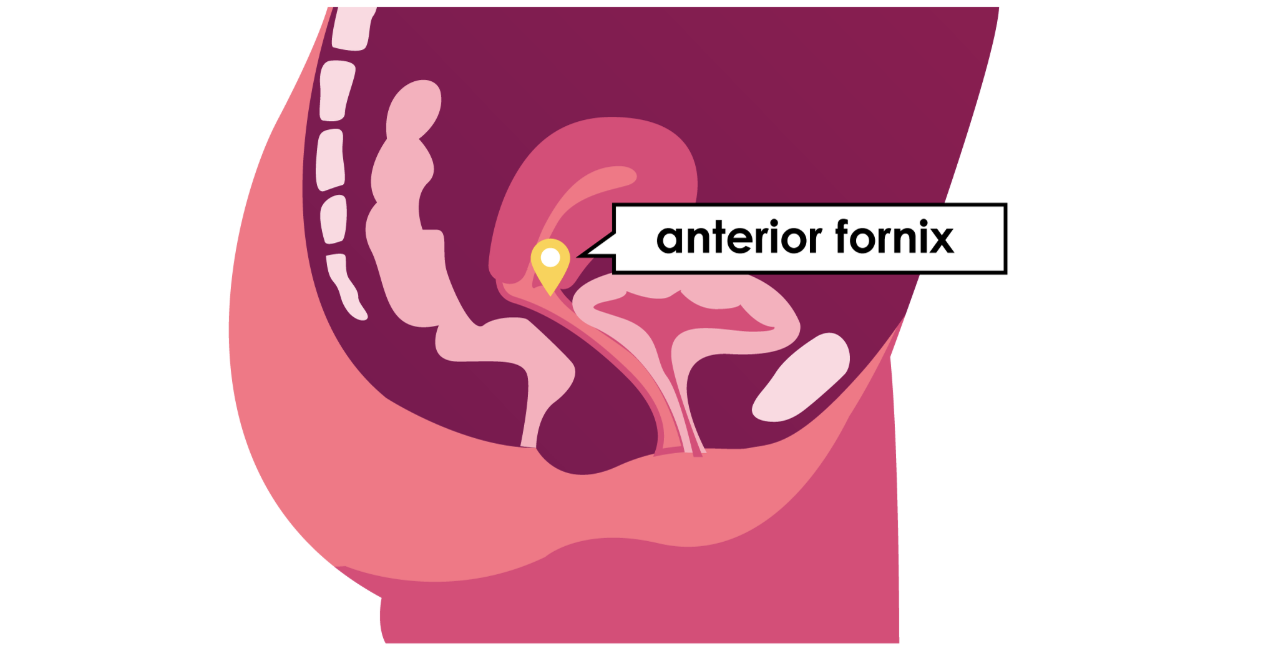
Clitoral orgasms and cervical orgasms travel along entirely different neural pathways to the brain. While clitoral sensation is carried predominantly by the pudendal nerve, which maps to the lower, more external regions of your sensory cortex, deep internal structures like the cervix are innervated by the pelvic and vagus nerves.
The vagus nerve is particularly fascinating.
It bypasses the spinal cord entirely, traveling directly from the cervix up to the brainstem, closely intertwined with the parasympathetic nervous system (your "rest and digest" mode).
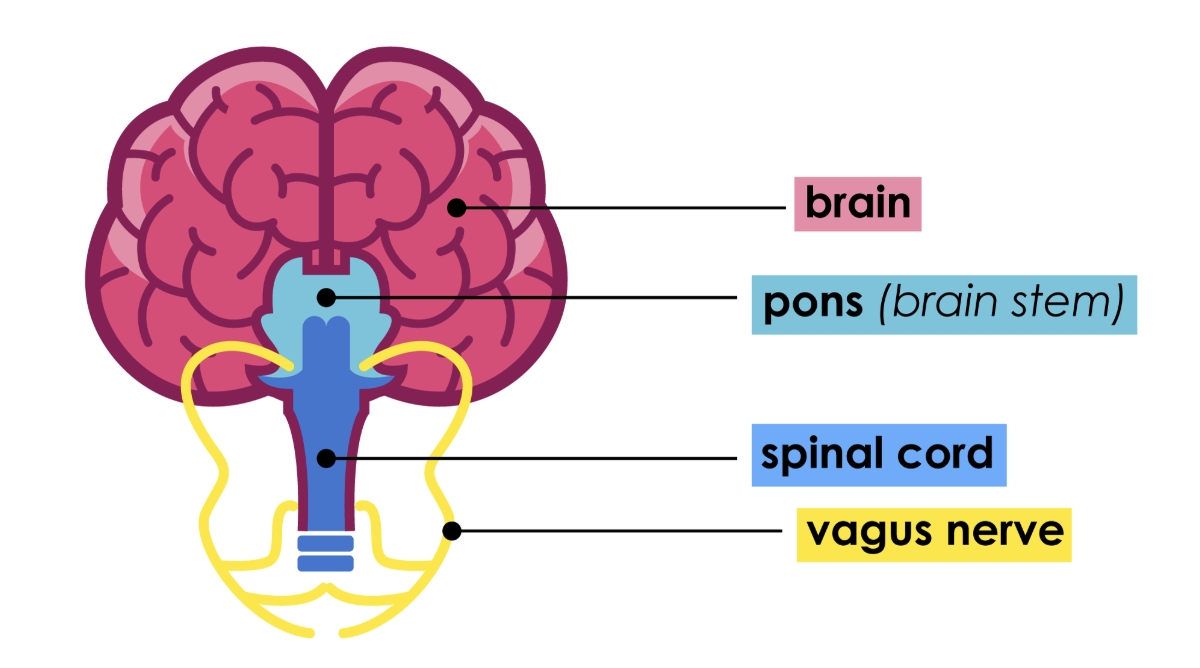
This is the direct scientific reason why a cervical orgasm feels fundamentally different from a clitoral one. While a clitoral climax is often localized, sharp, and intensely muscular, a cervical response is typically described as a systemic, full-body experience. It has been described as radiating outward, deeply relaxing, and emotionally profound.
So profound,in fact, that women with complete spinal cord injury were still able to achieve vaginal-cervical orgasms, thanks to the vagus nerve (Komisaruk, 2004).
That’s how powerful this connection is.
However, because the cervix sits deep within the pelvic cavity, the brain frequently has trouble communicating with it.
If a muscle or region of tissue is rarely moved or consciously engaged, the brain essentially "archives" that neurological map to save processing power.
The nerve endings are there, but the telephone line between your brain and your cervix is down. To wake it up, we have to rebuild that connection from the ground up.
The Crucial Role of the Pelvic Floor in Deep Sensation
To experience deep internal pleasure, your body must be capable of two things: muscular responsiveness and profound relaxation.
Seems counter intuitive, I know, but stick with me!
Most women struggle with cervical sensitivity because they fall into one of two extremes: their pelvic floors are either too weak to generate a clear sensory signal, or they are chronically tight (hypertonic), which physically blocks blood flow and prevents natural arousal.
When you become aroused, your body undergoes a process called vaginal tenting.
(Don’t worry, we’re not in the woods! At least not yet…)
So what is vaginal tenting?
It’s basically when the inner two-thirds of the vaginal canal lengthen and expand, and the cervix elevates upward to create space.
If your pelvic floor muscles are stiff, rigid, or unmapped, they will actively resist this expansion. Instead of feeling pleasurable, deep internal contact will simply feel like blunt, uncomfortable pressure.
By training the pelvic floor dynamically and focusing on strength, mobility, speed, health, and control you allow the tissues surrounding the cervix to become engorged, highly sensitive, and fully receptive.
Here are the 5 core exercises used within the Gohddess framework to cultivate the exact muscular conditions required for a cervical orgasm.
Exercise 1: The Milking Technique (Vertical Mobility)
The foundation of deep internal sensation is mobility.
The ability to consciously engage and move through the entire vertical length of the vaginal canal, rather than just squeezing the entrance. The Milking Technique trains your brain to map the canal level by level, moving toward the deepest zones near the cervix.
- How to do it: Imagine your vaginal canal is a ten-story building. Instead of a single, blunt contraction, begin by gently squeezing just the entrance (levels 1-3). Slowly, draw that contraction upward into the middle chamber (levels 4-7), and finally pull it to the absolute deepest point near the cervix (levels 8-10). Hold at the top for a brief second, and then slowly guide the contraction back down level by level until you reach a state of complete rest.
- Why it works: This exercise directly stimulates cortical remapping. Every time you consciously travel through the vertical landscape of your canal, you force your brain to allocate more neural resources to those zones. What previously felt like an undifferentiated, numb space slowly begins to reveal a detailed, rich internal geography.

Exercise 2: The Kegel Hold (Endurance)
A kegel hold, also called an isometric or long contraction (or simply “holding”) involves a sustained pelvic floor lift.
This beginner-friendly exercise is a variation of the standard kegel that directly targets Type I muscle fibers, which make up the majority of your pelvic floor muscles, and are directly responsible for your resting pelvic floor muscle tone..
- How to do it: A good starting point is 5 to 10 seconds per hold, for 3 sets of 5 repetitions. As you get stronger, you can work up to holds of 20 to 30 seconds. Beyond that, you're unlikely to get additional benefits.
- Why it works: In the context of a cervical orgasm, endurance is vital. It allows you to maintain consistent, enveloping pressure around a partner or toy at depth, ensuring the deep nerve endings receive continuous, stable stimulation without your muscles fatiguing prematurely.
Exercise 3: The Sucking Technique (Strength + Power)
Strength is the absolute foundation of pelvic floor training.
(And weirdly enough this is where all the health articles across the board get it right that strength training is important!)
Without it, your muscles cannot generate force against resistance at a meaningful intensity.
- How to do it: Contract your vaginal canal all the way in. Holding the contraction and then with the energy you have performing continuous short bursts of the pulling in motion at level 3 of the canal.
- Why it works: Because an orgasm is literally a series of involuntary pelvic floor contractions, building sheer strength via sucking ensures that when your cervical pathways are triggered, the resulting involuntary contractions are incredibly powerful, resonant, and deeply felt.
While mobility tracks movement, endurance holds teach your nervous system to tolerate sustained internal presence without panicking or shutting down sensory input.
Exercise 4: Vascular Pulsing (Speed & Tissue Engorgement)
Speed work trains your fast-twitch Type II muscle fibers.
These are the rapid-response fibers responsible for the explosive, rhythmic pulsing that happens involuntarily during an orgasm.
- How to do it: Start with a deep contraction and while holding the contraction you start squeezing the lateral walls of the vaginal canal in the second and third levels. So you are in the middle and upper levels, squeezing and releasing a couple of times in a pulsing motion(that’s why we call it pulsing) and then you release the contraction entirely.
- Why it works: Rapid contractions act as a mechanical pump, aggressively driving oxygenated blood into the pelvic region. This localized vascular rush triggers tissue engorgement of the internal clitoral bulbs and the deep vaginal walls, replicating the physiological state of high arousal and priming the deep nerves for a climax.
Exercise 5: Controlling (Advanced Segmental Control)
This is the ultimate stage of pelvic floor mastery, often referred to in ancient sexual wellness traditions as Pompoir or vaginal gymnastics.
It requires combining strength, mobility, and speed into a highly coordinated sequence of independent muscular waves.
- How to do it: Firstly inhale, then as you exhale, contract all the way until level 2 and then squeeze the front, side and back in a circular motion, then release. (Check out our course for the full details on how to do this)
- Why it works: Control demands intense neurological focus. It represents the pinnacle of neuromuscular control, allowing you to manipulate internal pressure and actively massage deep anatomy under deliberate conscious command during intimate moments.

How to Structure Your Practice: Training Frequency Table
Just like training at the gym, you cannot build a highly responsive pelvic floor by overworking it every day. The muscles require structured stress followed by intentional rest to adapt, build new neural pathing, and avoid hypertonicity.
|
Component / Exercise |
Target Benefit |
Recommended Frequency |
|---|---|---|
|
1. The Milking Technique |
Neurological Mapping & Depth |
2–3x per week |
|
2. Kegel Hold |
Endurance |
2–3x per week |
|
3. Sucking |
Strength |
1-2x per week |
|
4. Vascular Pulsing |
Blood Flow & Rapid Response |
1-2x per week |
|
5. Controlling |
Advanced Coordination & Control |
1-2 week (When rested) |
The Beginner Protocol
If you are completely new to this style of training, start simple.
Attempt 3 sessions per week.
Dedicate 5 minutes to building depth and blood flow using the Milking Technique, and always close your practice with 2 to 3 minutes of Kegel Holds paired with deep hip-opening stretches (like child's pose or deep yogi squats) to keep the surrounding tissue completely pliable.
Once you are comfortable with this, slowly starting pairing it up with Sucking and Vascular Pulsing
Is There a Program to Guide Me Step-by-Step?
Yes. (Thank God!)
If trying to piece these individual components together on your own feels overwhelming, you don't have to guess your way through it.
The Ohlympus Program is our flagship, fully animated, step-by-step training curriculum designed to take you from a complete baseline up to advanced Pompoir mastery.
Because internal movement can be incredibly difficult to conceptualize, our entire system uses high-definition, clear anatomical animations rather than confusing text descriptions or opaque video guides.
You can see precisely how a wave moves, what a proper deep release looks like, and how to accurately engage each individual level of your internal anatomy.
With lifetime access to every update and a supportive global community, it is a definitive roadmap for expanding your somatic awareness and unlocking the full depth of your biological pleasure potential.
Ready to become the ultimate sex goddess?
Get our step-by-step, fully animated Pompoir course.
Stay connected with news and updates!
We hate SPAM. We will never sell your information, for any reason.
