
The Kegel (Contracting)
Apr 23, 2026The exercise that launched an entire field of pelvic floor science, and the foundation of every Pompoir skill you'll ever learn.
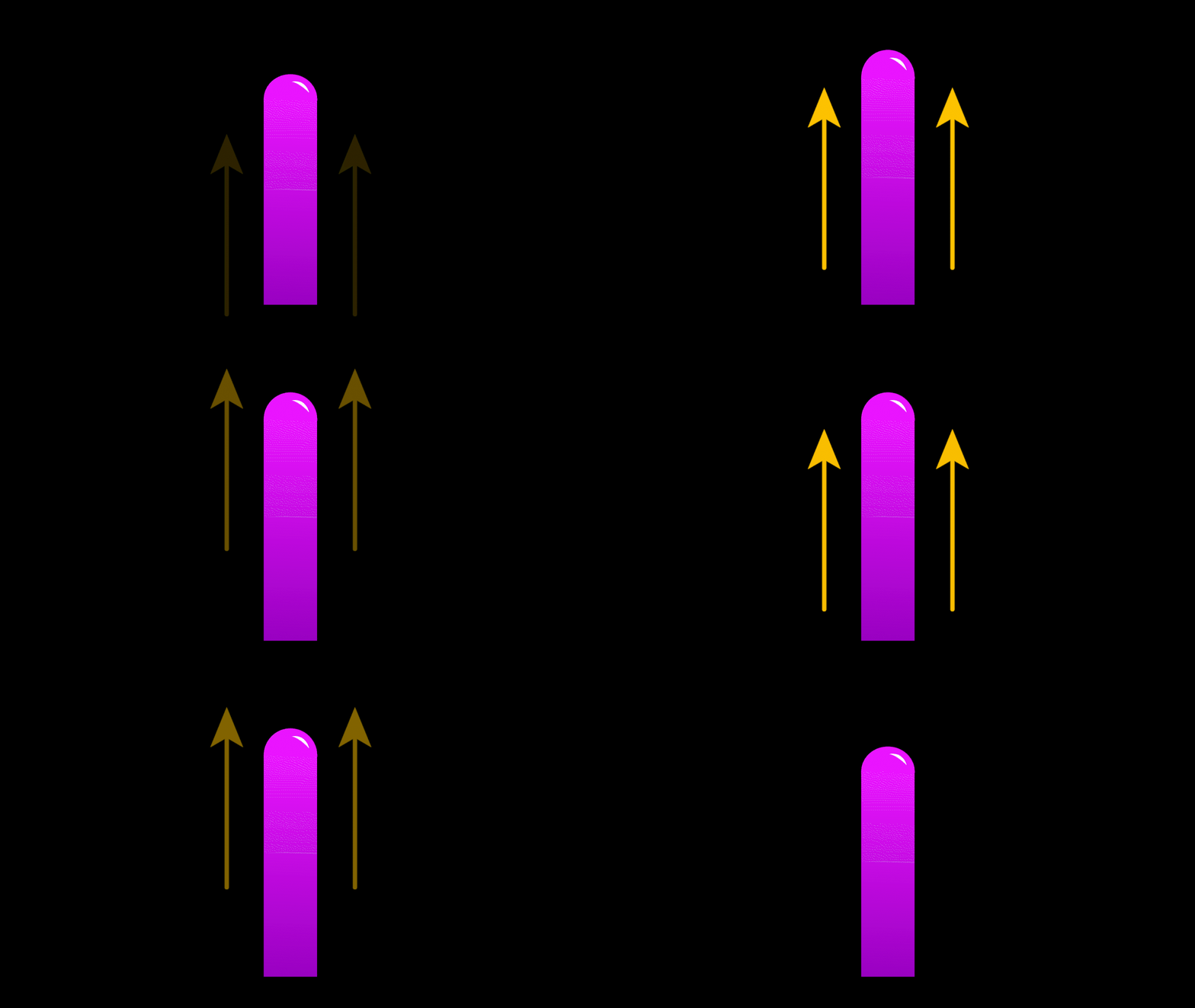
Imagine a probe inside your vagina as you contract.
- Level: Beginner
- Trains: Strength, Control, Power, Muscle Awareness
- Prerequisite: Green light from your physician that you can safely perform it.
What is a Kegel?
A kegel, also called a contraction, or a pelvic floor lift, is the most basic form of pelvic floor training. We actually kegel throughout our lives without noticing. One example is when we try to stop the flow of urine before we get to the bathroom. During orgasm, both men and women kegel involuntarily, in what’s known as “orgasmic contractions”.
Kegels were actually first developed as voluntary exercises in 1948 by Dr. Arnold Kegel as an effective way to prevent and treat urinary incontinence and organ prolapse.
In recent years, research has shown that kegels are also fantastic at improving female pleasure, female libido, and female orgasms.
You might’ve heard pelvic floor physiotherapists online claim that “most women kegel incorrectly”. While research suggests the percentage is closer to 23%, performing this exercise wrong can lead to worsening of incontinence and a decrease of vaginal sensation (read more in Common Mistakes).
How do Kegels Work?
Think of a kegel like a dumbbell curl for your pelvic floor: you’re lifting the muscles up, holding briefly, and then relaxing. Over time, these repeated contractions make the muscles stronger, more controlled, and easier to activate.
So if at the beginning doing ten kegels feels tiring or hard, as you continue with your training, it will feel very easy.
Strengthening your pelvic floor allows you to support your pelvic organs better, which is the exact cure (and prevention) of urinary incontinence and organ prolapse.
But in the realm of pleasure, something much more interesting happens.
Remember the “orgasmic contractions” we mentioned at the beginning of this article? Well, the stronger your pelvic floor muscles are, the stronger these involuntary contractions get and… you guessed it, the stronger your orgasms!
Building this foundation of strength in your pelvic floor muscles is also a necessary step to achieve all the other Pompoir skills, such as squeezing, milking, locking, and twisting.
Think of it like this: you’re not going to be able to perform a pull up if you don’t have strong biceps. Similarly, you won’t be able to perform all these crazy vaginal skills if you don’t have a strong pelvic floor base.
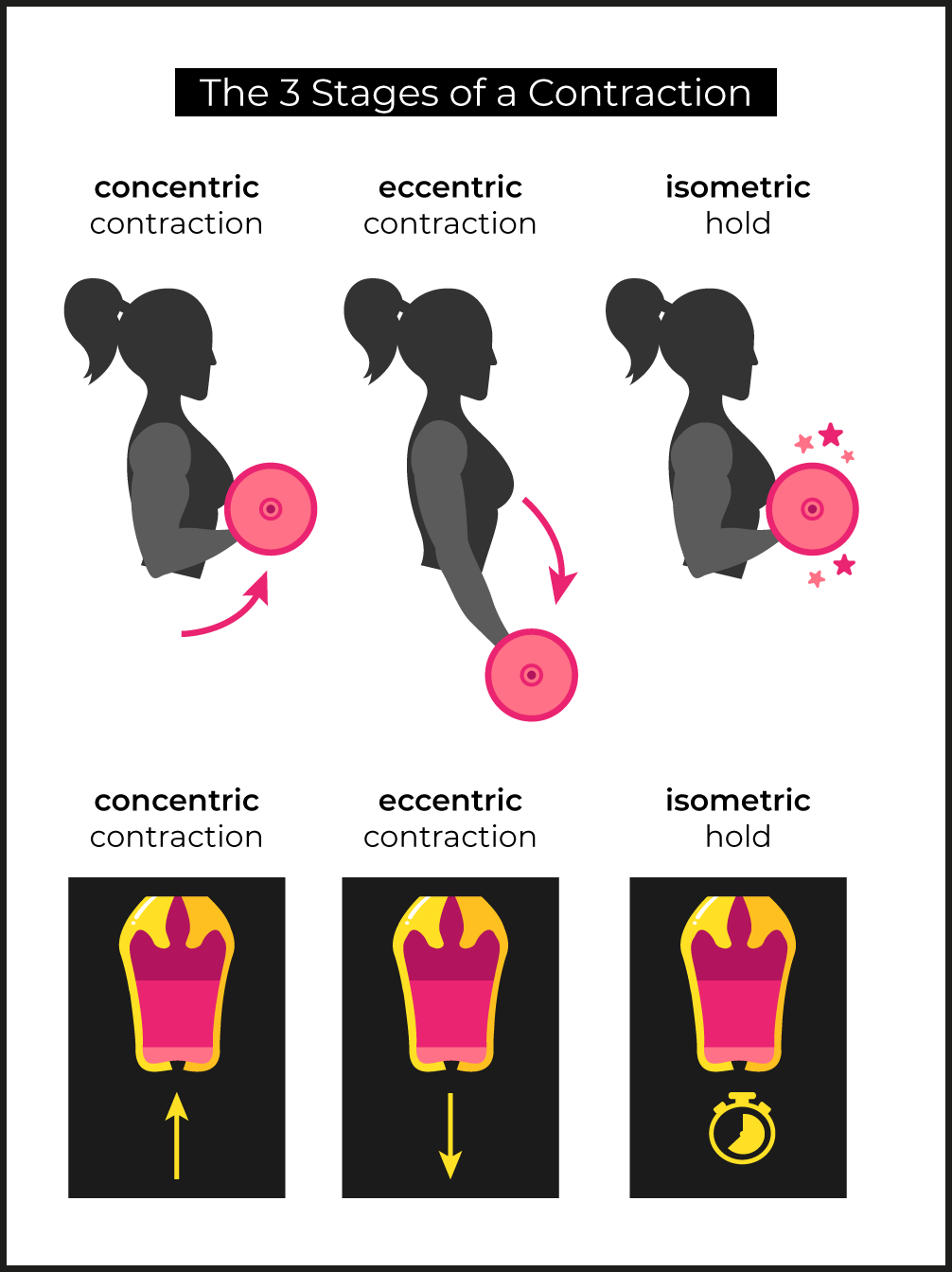
This is an image from our book, The Gohddess Method. Available for paperback and kindle on Amazon.
How Many Kegels Should You Do Per Day?
Assuming you’ve gotten the go-ahead from your pelvic floor physician, a good starting point is 3 sets of 10 contractions per day, three times a week. If that feels comfortable, you can consider increasing, or better yet, adding some kegel variations like the Long Contraction or the Eccentric Contraction.
As you get stronger and want to venture into true Pompoir (vaginal gymnastics) territory, you can start adding exercises like the Squeeze, the Milking Technique, and Rocking.
The most important variable isn’t volume but consistency. Thirty kegels done multiple times a week will outperform one hundred kegels done once every two weeks every single time. So pick a number you’ll actually stick to when first starting out.
Want to master this exercise + all the other Pompoir skills out there? Get lifetime access to our step-by-step vaginal gymnastics animated course.
How Do You Use Kegels During Sex?
Just because the kegel is relatively easy, doesn’t mean it’s not powerful. This exercise, when performed right, is extremely versatile during sex and still a staple move of even advanced Pompoir practitioners.
Here are the most powerful applications:
To accelerate orgasm. As you approach climax, your pelvic floor is already beginning to contract involuntarily. That's what an orgasm is, neurologically speaking. By adding voluntary contractions on top of that building wave, you amplify the signal and reach climax faster. Short, powerful pulses as you approach the edge will get you there quicker and make the orgasm itself more intense.
To extend your orgasm. Rather than letting the orgasmic contractions happen to you, you can participate in them. Contracting deliberately during orgasm (layering voluntary pulses on top of the involuntary ones) elongates the experience and increases its intensity. This is a skill that improves significantly with pelvic floor training, because stronger muscles produce stronger involuntary contractions to begin with.
To drive your partner to the edge. From your partner's perspective, a well-timed kegel mid-thrust is an entirely different sensation than anything movement alone creates. If you want to see a man truly lose his mind, start pulsing powerfully as you feel him approaching release. You'll amplify and elongate his orgasmic experience in a way he will not have words for.
To explore positions. Unlike more advanced exercises that work best in specific configurations, the kegel is position-agnostic. Students of our program have used it effectively in every position imaginable. This makes it the perfect exercise to start experimenting with during sex. Try it in different positions, at different moments, at different intensities, and let your own body tell you what works best.
What Are The Best Kegel Exercise Variations?
What Are The Most Common Kegel Mistakes?
Pushing down: Many women push down with their pelvic floor muscles, which is the exact opposite motion of a kegel. This pushing, similar to “power peeing” or the movement you’d do when delivering a baby can put a lot of pressure in your pelvic floor and make your muscles weaker, leading to urinary incontinence, organ prolapse, and loss of vaginal sensation.
Using the wrong muscles: The only muscles involved in a kegel should be your pelvic floor muscles. When sitting down and attempting a contraction, you should feel a pull happening around your vaginal area, not your glutes or your ab muscles.
Not relaxing: After you contract, it is equally important to relax your muscles. A lot of women hold tension in their pelvic floor muscles, and performing kegels without consciously releasing the contractions afterwards can lead to a hypertonic pelvic floor. That is, pelvic floor muscles that are overly tight and unable to relax. This can cause muscle spasms, pelvic pain, and worsened incontinence.
Who Should Do Kegel Exercises?
Most people can benefit from kegels! When performed properly, they lead to a strong and functional pelvic floor that will help with your athletic movement and your sex life, as well as prevent issues like incontinence and prolapse later in life.
If you want to train the art of Pompoir (vaginal gymnastics) the kegel is the very first exercise you’ll learn. This exercise (and its variations) will help you develop strong, sensitive muscles, which you need if you want to isolate the different sides of the vaginal canal to execute more complex and impressive skills.
Finally, anyone who wants stronger orgasms will benefit from adequate kegel training.
Just make sure you’re starting from a healthy place (check with your physician that you don’t have an already tight pelvic floor), and follow proper pelvic floor training guidelines to perform them safely.
If you're ready to go beyond the basics and train your pelvic floor the way athletes train their bodies, Pompoir is where you start.
Ready to become the ultimate sex goddess?
Get our step-by-step, fully animated Pompoir course.
Stay connected with news and updates!
We hate SPAM. We will never sell your information, for any reason.
